
One of America’s most competitive gubernatorial races could settle a heated argument over whether private insurance companies should run Medicaid.
The race is in Iowa, whose Medicaid program has been plagued with controversy since 2016, when the state hired national insurance companies to manage billions of dollars’ worth of benefits.
That shift was made by then-Gov. Terry Branstad, a Republican. With his executive order, Iowa joined most other states in privatizing the management of Medicaid, which covers healthcare for more than 67 million Americans with low incomes or disabilities.
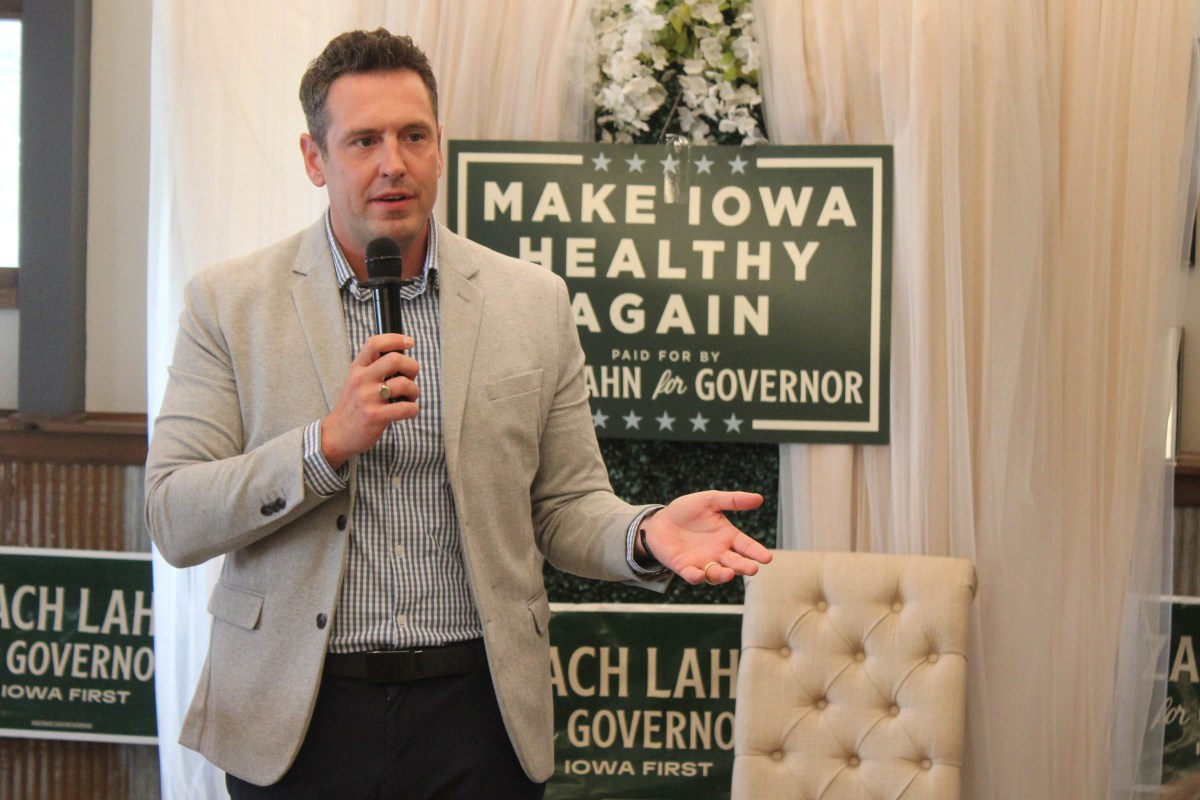
The arguments have resurfaced this year during the competition to replace Republican Gov. Kim Reynolds, who was Branstad’s protégé and continued contracting with private companies to manage Medicaid benefits. Zach Lahn, the Republican candidate to succeed the retiring governor, supports the practice. Rob Sand, the Democratic candidate, wants to end it.
“It’s been a disaster,” said Sand, Iowa’s state auditor. “The number of complaints has been catastrophic.”
Pros and Cons
Supporters of privatization say the insurers, known as managed-care organizations, make Medicaid more effective and efficient. Critics contend the companies pad their profits by denying payment for crucial health services and by shortchanging agencies and professionals who provide care.
Iowa is among 41 states, plus the District of Columbia, that contract with outside companies to run at least part of their Medicaid programs. Overall, private insurers manage the benefits of more than three-quarters of Medicaid patients. Connecticut is the only state that has fully reversed course after privatizing its Medicaid system.
Sand has criticized privatized Medicaid for years. As state auditor, he published reports alleging that the national insurers systematically deny or delay payment for services to which Medicaid participants are entitled.
He has vowed not to renew state contracts with the three insurers managing care for more than 600,000 Iowans on Medicaid, which is jointly financed by the state and federal governments. He would resume having state employees review and pay bills from clinics, hospitals, and other healthcare providers.
Lahn told KFF Health News that Sand’s pledge to resume state administration of Medicaid “is the exact wrong idea.”
Lahn is a former activist for Americans for Prosperity, a national pro-business group affiliated with the Koch family. He contends that state governments and Medicaid participants benefit when insurers compete to serve them.
“There are very few things that government does more efficiently than the private sector,” he said.
Lahn, who is a businessman and farmer, emphasized that state officials should strictly enforce contract requirements, ensuring that the insurers treat Medicaid recipients fairly and make prompt payments to care providers. He also said he would bar insurers from using artificial intelligence systems to determine whether to pay for medical claims under Medicaid. “Iowans deserve to have a human looking at their case,” he said.
Sand said in a recent interview that he doesn’t want Iowa to fully return to a “fee-for-service” Medicaid system, in which hospitals, clinics, and other healthcare agencies would effectively be paid piecemeal for whatever services they provided. Instead, he said, state employees should take over operation of a managed-care system, in which administrators review services to help ensure Medicaid participants receive what they need without wasting public money on ineffective services.
A few months ago, Republicans controlling the Iowa Legislature considered a bill to require the state to have a privately managed Medicaid system. That proposal would have blocked future governors from unilaterally shifting back to public management of the program. But the bill failed to pass.
Sand, a former assistant state attorney general, said he is confident he would have legal authority as governor to stop contracting with private Medicaid managers, although he cautioned that the transition would be complicated and could take time.

A Toss-Up Race
National political observers say the Iowa governor’s race could go either way.
This June, Lahn won an underdog primary campaign to beat a sitting congressman backed by President Donald Trump. Lahn gained Trump’s endorsement after winning the Republican primary. He is a vocal supporter of the Make America Healthy Again movement, led by Health and Human Services Secretary Robert F. Kennedy Jr., which aims to improve Americans’ diets and reduce environmental poisons.
Sand noted that Lahn’s past political activism included a failed 2014 attempt to defeat a proposal to cover more people under Montana’s Medicaid program.
Lahn said that at the time he worried the federal government would reduce how much money it would contribute to such Medicaid expansions, leaving states to foot much of the bill. He said he also didn’t want to see public programs such as Medicaid giving benefits to adults capable of providing for themselves. But he said those concerns have been allayed, partly by the Trump administration’s moves to require millions of Medicaid recipients to prove they are working, volunteering, or going to school.
If elected governor, he said, he would not try to reverse Iowa’s expansion of Medicaid, which happened in 2014 under Branstad.
Branstad also is the governor who decided in 2016 to hire private insurers to manage Medicaid.
Branstad, who declined to comment for this article, did not need the legislature to approve his momentous decision. He weathered controversy over the change, including allegations that the companies systematically denied payment for care that people with disabilities needed to remain in their homes.
Andy Schneider, a Georgetown University researcher who studies health policy issues, said it’s understandable that many government leaders see an advantage in hiring private Medicaid management companies. Each state’s Medicaid program pays claims for hundreds of thousands or even millions of members, and administrators must scrutinize bills from thousands of hospitals, clinics, and other healthcare organizations. “That’s a heavy lift,” said Schneider, who worked in federal Medicaid administration when Barack Obama was president.
Schneider noted that Medicaid expenses are among the biggest parts of any state’s budget. The costs can vary dramatically year to year, he said, which is hard for legislators and governors to plan for. Management companies sign contracts for set amounts of money per enrollee, depending on people’s ages and health conditions. Managed-care companies say they can improve Medicaid members’ health and reduce expenses. But Schneider said outside researchers have been unable to confirm or disprove those claims.
Federal law gives states flexibility in how they run their Medicaid programs, including whether they hire private insurers to manage the programs. “Unwinding those arrangements might take a little time, but there’s no question they can do it,” Schneider said.
Connecticut ended its use of private insurers to run Medicaid in 2012. Minnesota legislators decided to contract only with nonprofit insurers, starting in 2025, and that state’s governor has talked about doing away with private management altogether.
Gary Jessee, a former Texas Medicaid director who helped transition that state’s program into managed care, noted that most Americans’ health coverage is managed by some kind of insurance company, whether they obtain it on their own or get it through a government or employer plan.
Jessee now helps run a health policy consulting company whose clients include Medicaid managed-care companies. He said states rarely talk about totally scrapping contracts with such companies. Instead, he said, states have options to change the contracts, including to increase oversight or limit profits.
Overall, Jessee said, managed-care companies help Medicaid enrollees obtain the services they need to stay healthy. But it’s hard to calculate how much money the companies save states, he said, because all healthcare costs have been rising, and new members of managed-care plans may at first use more services as the insurance companies encourage them to get regular checkups instead of waiting for emergencies.
Iowa’s Medicaid program is managed by three insurers: Molina Healthcare, Elevance Health subsidiary Wellpoint, and Centene subsidiary Iowa Total Care.
None responded to requests for comment for this article.
Catherine Gray of Des Moines helps run a Facebook page for families who use Iowa’s Medicaid system. Her adult son, John, is on Medicaid because of a disability. Gray said the managed-care companies have made it much harder for people to obtain services, including mental healthcare, dental care, and transportation to health appointments. Iowa’s shift to the private system was abrupt and chaotic, she said. “We know people have died,” she said.
Gray said she probably will vote for Sand for governor, even though she doesn’t agree with every nuance of his stance on Medicaid. She suspects many other Iowans who use the program will do the same. “They’ve really been put through the wringer for 10 years, and they’re exhausted.”
This article first appeared on KFF Health News and is republished here under a Creative Commons Attribution-NonCommercial-NoDerivatives 4.0 International License.
from KFF Health News https://ift.tt/F95XEap


