We are try to give suggetion healthcare or health care related tropic.we want to help the people for knowledge about his health care.

Showing posts with label IFTTT. Show all posts

People With Disabilities Fear Service Cuts as Trump’s DOJ Questions Legal Protections

Amanda DeSimone-Shabrack relies on a home healthcare aide to help her high-needs autistic 12-year-old son. Virginia’s Medicaid program covers the assistance, enabling her to work as both an education technology specialist and a professor, run errands, and keep Mason in the home.

That could change. In June, the Department of Justice issued a legal opinion saying federal disability rights laws don’t require states to provide services that allow people with disabilities to remain in their homes rather than institutions.

It’s a sharp reversal from 1999, when a landmark Supreme Court ruling held that unjustified institutionalization constituted discrimination under the Americans with Disabilities Act. Previous administrations have relied on that ruling to enforce civil rights for disabled people, but the Trump administration says that long-held interpretation is wrong.

Advocacy groups say legal protections for about 40 million adults and 5 million children who have disabilities could be undermined, and they worry that the new interpretation may herald a return to forced institutionalization.

The stage is also now set for a legal fight between advocates, states, and the federal government. Some states with ongoing lawsuits challenging disability rights requirements are already citing the DOJ opinion in hopes it will help them prevail.

In a case in Texas, for example, some Republican-led states are arguing that a rule instituting a 1973 civil rights law that led to community and home integration of people with disabilities is costly and infringes on states’ rights.

People like DeSimone-Shabrack are especially worried because, they say, the opinion follows a spate of White House and Republican-led initiatives that have already begun eroding hard-won protections for people with disabilities.

“I’m worried. Am I going to have to put him in an institution, and what’s that going to be like for him?” said DeSimone-Shabrack, whose personal home care help was recently reduced from 30 to 18 hours a week by the state. “As he gets older, am I going to be able to care for him without this support?”

The Department of Health and Human Services remains steadfast in enforcing federal civil rights laws, agency spokesperson Emily Hilliard said in an email.

“Our commitment to ensuring that individuals with disabilities are treated with dignity, afforded equal opportunity, and are able to meaningfully access community services remains unchanged,” she said.

But advocacy groups say the DOJ opinion could have sweeping repercussions. The opinion doesn’t change existing law, but advocates worry that HHS and the DOJ could begin rescinding guidance and regulations that mandate integration for people with disabilities.

They’re concerned that agencies will stop enforcing disability laws that ensure people aren’t unnecessarily institutionalized. HHS, for example, has historically investigated disability discrimination claims at hospitals and in states that get federal funding, enforcing compliance with home and community integration through voluntary agreements. Disability rights experts say those agreements could now be imperiled.

And some states facing financial pressures may roll back Medicaid services that enable people with disabilities to stay in their homes and communities — a trend that’s already happening following last year’s passage of the One Big Beautiful Bill Act, which cuts a projected $900 billion-plus from the safety net program over a decade.

Democrats are seizing on the opinion, which was released in a DOJ memo, to portray President Donald Trump and Republicans as a threat to people with disabilities. Sen. Tammy Duckworth (D-Ill.) and other Senate Democrats led the introduction of a resolution calling on the DOJ to rescind the opinion.

“The Trump Administration’s memo is an outrageous attack on the rights and independence of the disability community,” Duckworth said in a statement.

The DOJ didn’t return emails seeking comment.

According to the DOJ’s interpretation, regulations that give disabled people the right to demand certain services for daily living — bathing, mental health counseling, and financial budgeting help, for instance — and that require states to extend community-based services to mentally disabled individuals are unlawful, a view the agency acknowledged “is out of step with the common understanding of that decision within the federal courts.”

States may have legitimate reason to treat mentally disabled people in institutions, “including resource constraints, capacity limitations in community-based facilities, and safety concerns for both the patient and the community,” the memo reads.

The Supreme Court case, Olmstead v. L.C., has long shaped federal policy. And while it remains to be seen how courts will respond to the DOJ, some states seeking to curtail disability protections see the opinion as significant.

Consider the 2024 lawsuit in federal court in the Northern District of Texas by Republican-led states arguing that an HHS rule about the integration mandate is unlawful. The lawsuit began with broader claims and 17 state plaintiffs. Following significant advocacy from the disability community, only Texas, Alaska, and Florida remain.

Following the new DOJ interpretation, the states filed documentation to inform the court about the memo as a new and relevant development. Similar documentation citing the memo has been filed in disability rights cases in Florida and New Hampshire, according to The Arc of the United States, a disability advocacy group.

Advocates for people with disabilities say the speed at which plaintiffs are citing the opinion underscores how it may be used to justify the erosion of protections.

“The administration’s attempt to dismantle decades of progress in community integration is alarming and inconsistent with federal disability rights laws and Supreme Court precedent as well as the critical enforcement work of prior administrations,” said Shira Wakschlag, senior executive officer of legal advocacy and general counsel at The Arc.

Forced institutionalization led to human rights violations, segregation, and a eugenics movement in the late 19th and early 20th centuries that included involuntary sterilization.

Exposure of the abuses, legal battles, and an independent living movement caused a major shift toward integration. Fewer than 1% of people with intellectual or developmental disabilities lived in state-run facilities in 2021, down from almost 30% in 1967, according to data from the University of Minnesota’s Residential Information Systems Project, which maintains metrics on such long-term services and supports.

The Trump administration has already taken steps to reverse that trend, advocates say.

Trump signed an executive order last year that addresses homelessness by expanding involuntary treatment and institutionalization, reversing a “housing first” approach championed by the Biden administration.

Much of the special education program office is moving from the Department of Education to HHS, raising concerns among advocates that the administration is reverting to a view that disabilities are a medical issue to be fixed rather than differences that can be accommodated.

And cuts in federal funding for Medicaid, a federal-state insurance program for people with low incomes or disabilities, also portend fewer resources and services. States have responded by reducing some optional benefits such as home health aides and support. In addition, qualifying for an exemption from the program’s work requirements, which take effect Jan. 1 in most states, will pose significant hurdles for people with disabilities.

The June DOJ opinion, advocates say, could accelerate the shift and result in court rulings that chip away at disability rights.

“While it doesn’t overnight change the law, it’s very troubling and very dangerous,” said Zoe Brennan-Krohn, director of the Disability Rights Program at the American Civil Liberties Union. “It reflects a really deeply held disrespect for disabled people from this administration and a total lack of awareness of the lived experiences of people with disabilities who are living in their homes.”

Data shows there can be benefits to involuntary institutionalization. Relative to those voluntarily admitted, people with psychiatric illness who were involuntarily admitted “experienced greater improvements in symptoms and function,” according to a September 2024 review in Psychiatry, Psychology and Law, a peer-reviewed academic journal.

Deinstitutionalization has created new challenges. More hospitals have been forced to board people with psychiatric illness in emergency rooms because of a dearth of available beds. And moving people into home- and community-based living was supposed to be accompanied by an increase in outpatient care and treatment that never materialized, creating gaps in support.

But advocates for the disabled community say involuntary institutionalization strips people of their autonomy and poses a higher risk of neglect and abuse.

Jennifer Kucera, 57, of Cleveland, spent two years in a nursing home. She has spinal muscular atrophy, a genetic disease that kills motor neurons, leaving her able to move only part of her left arm and her head.

At the institution, she said, she felt bored and trapped and developed intense itching from scabies, which is caused by microscopic mites.

For more than a decade, however, she has lived in an apartment with the help of caregivers who come in the morning to get her dressed and ready and return to put her to bed. She works at a disability rights group, and her care is covered by Medicaid.

“The two years I lived in the nursing home, it was the most horrible time in my life,” said Kucera, who worries about the DOJ opinion on Olmstead. “My future is a shaking floor beneath me. With the stroke of a pen, they could get rid of everything I’ve built for myself.”

KFF Health News is a national newsroom that produces in-depth journalism about health issues and is one of the core operating programs at KFF—an independent source of health policy research, polling, and journalism. Learn more about KFF.

This article first appeared on KFF Health News and is republished here under a Creative Commons Attribution-NonCommercial-NoDerivatives 4.0 International License.


from KFF Health News https://ift.tt/D205meq

Watch: Democratic Senator Proposes a Fix for American Healthcare — Covering All Kids

In this “How Would You Fix It?” interview, Julie Rovner, KFF Health News’ chief Washington correspondent and host of the What the Health? podcast, sat down with Sen. Andy Kim, a New Jersey Democrat, to discuss his proposal to grant all kids access to health coverage.

Kim, who serves on the Senate Health, Education, Labor and Pensions Committee, said it is “a real dereliction of our duty that we have not found a way to be able to ensure that every child is able to go see a doctor when they need to without breaking the bank.”

Under the senator’s proposal, children would be automatically enrolled at birth in the public program, which he has dubbed MediKids. Parents would have the option to opt their kids out, though they could reenroll them at any time until age 26, Kim told Rovner.

“You want to make sure that all of these kids are able to get the care that they need as their bodies are and their brains are developing and that you don’t see the kind of withdrawal of or restriction of care that could have real consequences down the road,” he said.

Kim said offering comprehensive, universal coverage to American children would help them avoid chronic conditions in adulthood, in addition to providing broader societal benefits, such as a healthier workforce.

He added that he hopes his idea could gain traction should Democrats claim a majority in Congress in the midterm elections, as well as foster an important discussion about healthcare in the 2028 presidential race.

KFF Health News is a national newsroom that produces in-depth journalism about health issues and is one of the core operating programs at KFF—an independent source of health policy research, polling, and journalism. Learn more about KFF.

This article first appeared on KFF Health News and is republished here under a Creative Commons Attribution-NonCommercial-NoDerivatives 4.0 International License.


from KFF Health News https://ift.tt/jYo7Kan

PM2.5 pollution associated with increased disease, flare risk in rheumatoid arthritis: Study

Findings published in the journal Annals of the Rheumatic Diseases underscore the importance for healthcare providers and policymakers to recognise the impact air pollution can have on how one manages the condition.

from Top Health News | Latest Healthcare Sector & Healthcare Industry news, Information and Updates: ET HealthWorld : ETHealthworld.com https://ift.tt/n1ZR6PQ

Pediatricians and Health Departments Sidestep Trump’s CDC on Vaccine Guidance

AMHERST, Mass. — For the last 30 years, whenever pediatrician John Snyder wanted to find the most up-to-date research on treating young patients, he would turn to the Centers for Disease Control and Prevention.

If he wanted to learn more about an outbreak of measles or hantavirus, he would pore over the weekly CDC report that came by email. If a patient’s family was traveling to Africa or Asia, he would check the latest CDC vaccine recommendations for overseas travel. And if a family was worried about potential side effects from a shot, he could always send them to the CDC’s website to bolster his argument to get the immunization.

Public trust in the CDC has hit bumps in the road during infectious disease outbreaks, but for medical professionals, Snyder said, “the CDC used to be, worldwide, the most trusted source of information pertaining to public health and infectious disease.”

Yet even doctors began losing trust, Snyder said, after Donald Trump was elected president again. Trump quickly tapped longtime anti-vaccine activist Robert F. Kennedy Jr. as his nominee to lead the Department of Health and Human Services, which oversees the CDC.

Within months of his confirmation as secretary, Kennedy had dismissed every member of the CDC’s vaccine advisory board and replaced them with new appointees, some of them prominent vaccine skeptics.

“It turned into a completely unreputable source of information,” Snyder said.

This rupture of scientific trust in the CDC has put many pediatricians like Snyder in a bind, as they no longer turn to the country’s preeminent public health agency and instead search for ways to fill the information gap. Some doctors are launching their own vaccine education efforts, sometimes in collaboration with local public health departments.

On Jan. 5, the CDC removed some vaccines from the recommended vaccine schedule for all children — against the advice of major medical groups like the American Academy of Pediatrics. The number of recommended vaccines shrank as the agency dropped rotavirus, covid-19, influenza, hepatitis A, hepatitis B, and meningococcal disease from the list. The agency did not respond to a request for comment for this article.

In March, after medical groups sued, a federal judge ordered the Trump administration to revert to the previous guidelines. The administration has appealed the judge’s decision.

Medical products in white baskets rest on a shelf with CDC labels in front of them.
The storeroom of childhood vaccines at Amherst Pediatrics. (Karen Brown/New England Public Media)

The back-and-forth “creates a whole bunch of confusion in the public,” Snyder said. “And it’s very confusing even for healthcare providers.”

So he’s trying to be clear to patients about what the evidence shows, even if that means going against the federal government. His practice, Amherst Pediatrics, changed its website to say: “The CDC is no longer considered to be a reliable or legitimate source of information.”

“It’s shocking that we have to say that,” Snyder said. Instead, the site directs families to get information from their own doctor, the state of Massachusetts, or nongovernmental medical organizations including the AAP.

In the exam room, Snyder is having more tense conversations with families. He said some parents are explicit that they want to hew to what the CDC recommends. “Even if they don’t say that, we have definitely seen increasing hesitancy and questions,” he said. “All of that interferes with us protecting children.”

On a spring afternoon, several of Snyder’s young patients came into Amherst Pediatrics for routine visits.

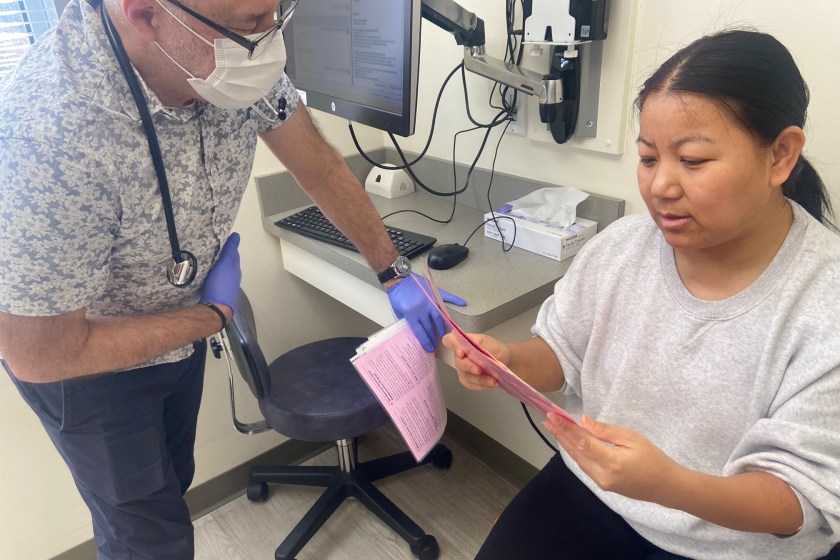
“Let’s talk about vaccines,” Snyder said to one mother, Tenzin Dekey, who was there with her 1-year-old. Snyder explained that her son was due for the MMR vaccine, which protects against measles, mumps, and rubella, in addition to the chickenpox, hepatitis A, and flu vaccines.

“So that’s four shots, two in each leg,” he said, as he handed Dekey CDC information sheets about the vaccines. She glanced at them and agreed to the shots.

A male doctor wearing a short sleeve button down and face mask hands a woman, who is seated beside his computer system, informational papers.
Pediatrician John Snyder gives vaccine information to Tenzin Dekey, who had brought her 1-year-old son to Amherst Pediatrics for an annual exam. She accepted the vaccines Snyder recommended. (Karen Brown/New England Public Media)

Ironically, the information sheets are stamped with the CDC’s logo — as required by law — even though Amherst Pediatrics has explicitly directed patients away from the CDC. Snyder said he hates that disconnect.

“This has been a source of heated discussion,” he said. “How can we be saying, ‘Do not trust the CDC when it comes to vaccines,’ yet here is the information we’re giving our own patients when they’re in the office about vaccines?”

Another mother brought her 14-year-old son for his annual physical. She asked to be identified by only her first name, Melissa, so she could freely discuss her family’s private health issues.

Snyder recommended the HPV vaccine, which helps prevent some cancers. Although Melissa had refused the HPV vaccine in a previous visit, this time she left the decision up to her son. He agreed to it. But for other vaccines, she wouldn’t budge.

“I’m a hard ‘no’ on the covid,” she told Snyder.

“We could talk about that if you want,” he suggested.

“I don’t need to talk about it,” she replied.

After the appointment, Melissa said she just doesn’t know whom to trust anymore when it comes to vaccine safety. She used to get information from the CDC but no longer does.

“I worry that it’s been politicized a lot, and I don’t like politics,” she said. “Now I prefer to hear things from people, healthcare professionals.”

Such distrust and confusion inspired Snyder to join an independent vaccine information campaign, along with other pediatric practices and health departments in the Connecticut River Valley of Western Massachusetts.

The campaign’s website, which is promoted in Snyder’s waiting room, is called Valley Vax. It sidesteps the CDC and highlights advice from local doctors and national medical groups, including the AAP. Valley Vax bought ads on the sides of buses in Western Massachusetts to promote the site, with the faces and testimonials of local doctors including Snyder.

“We wanted something that felt familiar and appealing and that they might be more likely to trust,” said Kiko Malin, director of Amherst’s public health department, who coordinates the Valley Vax effort.

An advertisement on the outside of a public transit bus shows a child smiling with arms outstretched.
The independent health website Valley Vax is advertised on the sides of buses in Western Massachusetts. (Kiko Malin)

She said the organizers decided not to criticize the CDC outright.

“Some information from the CDC is reasonable. Like they are doing a good job of tracking influenza-like illness rates in the country,” Malin said. “It’s important not to discount an organization completely.”

Still, she said it’s the first time she’s had to contradict health information from the CDC. “That’s not a comfortable place to be in at all,” she said.

Other health leaders are also banding together to get out evidence-based information. At the state level, California, Hawai‘i, Oregon, and Washington — frustrated with the CDC — operate the West Coast Health Alliance to “ensure the public has access to credible information.” And governors of 14 states and Guam set up the Governors Public Health Alliance in response to declining trust in federal health agencies.

Locally, some public health departments are partnering with community leaders to reach people who have stopped listening to government institutions but “do have strong connections within their faith community or do have strong connections within their neighborhood,” said Adriane Casalotti, a spokesperson for the National Association of County and City Health Officials.

Like Amherst, many local health departments now direct people to professional medical organizations instead of the CDC, Casalotti said, because advice from those groups may change slightly as the science evolves, but it’s unlikely to change with each lawsuit against the government.

This article is from a partnership that includes New England Public Media, NPR, and KFF Health News.

KFF Health News is a national newsroom that produces in-depth journalism about health issues and is one of the core operating programs at KFF—an independent source of health policy research, polling, and journalism. Learn more about KFF.

This article first appeared on KFF Health News and is republished here under a Creative Commons Attribution-NonCommercial-NoDerivatives 4.0 International License.


from KFF Health News https://ift.tt/r2BFWT7

FSSAI prohibits Dabur from selling food products with '100%' claims

India's food regulator FSSAI has banned Dabur India from selling many products. These products included honey and cow ghee with misleading '100 per cent' claims. The regulator stated these claims were unverifiable and likely to mislead consumers. FSSAI directed Dabur to immediately stop selling these identified food products. An action taken report is required from Dabur within fifteen days.

from Top Health News | Latest Healthcare Sector & Healthcare Industry news, Information and Updates: ET HealthWorld : ETHealthworld.com https://ift.tt/bsgC2X0

Govt orders to begin CCMP-BHMS registration, IMA to strike today

On Monday evening, the govt issued a GR directing MMC to begin registration of CCMP-BHMS practitioners, confirmed MMC registrar Dr Rakesh Waghmare.

from Top Health News | Latest Healthcare Sector & Healthcare Industry news, Information and Updates: ET HealthWorld : ETHealthworld.com https://ift.tt/sJoMkIA

India logs 20,138 organ transplants in 2025

Addressing the 16th Indian Organ Donation Day programme organised by the National Organ and Tissue Transplant Organisation (NOTTO), Patel said India now ranks third globally in the total number of organ transplants after the United States and China, while retaining its leadership in living donor organ transplants.

from Top Health News | Latest Healthcare Sector & Healthcare Industry news, Information and Updates: ET HealthWorld : ETHealthworld.com https://ift.tt/CDMKc9F

Nadda reviews NEET-PG 2026 preparations; cautions against paper leak rumours

A total of 2,73,183 candidates have registered for the examination, an increase of over 12.5 per cent compared to the previous year, a health ministry statement said.

from Top Health News | Latest Healthcare Sector & Healthcare Industry news, Information and Updates: ET HealthWorld : ETHealthworld.com https://ift.tt/65WsHN0

Over 53% TB prescriptions outside govt progs faulty: Study

The study led by doctors from Indira Gandhi Govt Medical College (IGGMC), Nagpur, has found that 53.3% of anti-TB prescriptions issued in healthcare settings outside National Tuberculosis Elimination Programme (NTEP) do not follow recommended treatment guidelines.

from Top Health News | Latest Healthcare Sector & Healthcare Industry news, Information and Updates: ET HealthWorld : ETHealthworld.com https://ift.tt/ksmV1eO

Ebola outbreak in DR Congo 'intensifying': WHO

The Ebola outbreak in the Democratic Republic of Congo is intensifying at an "exceptional" pace, the World Health Organization warned on Saturday, calling for a significant scaling-up of the health response. A vaccine described by the World Health Organization as the "most promising" to fight the current outbreak will be developed by Singapore-based Hilleman Laboratories, it announced on Thursday.

from Top Health News | Latest Healthcare Sector & Healthcare Industry news, Information and Updates: ET HealthWorld : ETHealthworld.com https://ift.tt/TOUIV2r

After 'Ozempic Face', experts warn of 'Ozempic Hair' as hair loss concerns grow

A 2025 study published in PubMed Central (PMC), titled Prevalence and Predictors of Hair Shedding Among GLP-1 Receptor Agonist Users, found that nearly seven out of ten GLP-1 users reported some degree of hair shedding in real-world settings.

from Top Health News | Latest Healthcare Sector & Healthcare Industry news, Information and Updates: ET HealthWorld : ETHealthworld.com https://ift.tt/LVYNQOC

FSSAI cracks down on three firms over food safety violations

The regulator said the actions were taken to protect consumers and ensure compliance with food safety laws. It warned that violations of the Food Safety and Standards Act, 2006, would invite strict legal and penal action.

from Top Health News | Latest Healthcare Sector & Healthcare Industry news, Information and Updates: ET HealthWorld : ETHealthworld.com https://ift.tt/z5iLWnr

Journalists Catch You Up on Fauci Hearing, Peptides, and Kids’ Caffeine Consumption

Céline Gounder, KFF Health News’ editor-at-large for public health, discussed how children’s caffeine consumption is affecting their health on CBS News’ CBS Mornings on July 30.


KFF Health News senior correspondent Arthur Allen discussed the recent Anthony Fauci Senate hearing on CBS News 24/7 on July 29.


KFF Health News chief Washington correspondent Julie Rovner discussed the Fauci hearing on WBUR’s Here & Now on July 29. Rovner also discussed exceptional Affordable Care Act enrollment in New Mexico on KJZZ’s The Show on July 29.


KFF Health News national public health correspondent Amy Maxmen discussed the FDA potentially easing restrictions on peptide drugs on CBS News 24/7 on July 24.


KFF Health News Georgia correspondent Briah Lumpkins discussed the local impact of the loss of Environmental Protection Agency grant money on WUGA’s The Georgia Health Report on July 24.


KFF Health News Hawaiʻi correspondent Ashley Mizuo discussed the challenge of finding placement for prisoners after their compassionate release from detention on Hawaiʻi Public Radio’s The Conversation on July 22.


KFF Health News is a national newsroom that produces in-depth journalism about health issues and is one of the core operating programs at KFF—an independent source of health policy research, polling, and journalism. Learn more about KFF.

This article first appeared on KFF Health News and is republished here under a Creative Commons Attribution-NonCommercial-NoDerivatives 4.0 International License.


from KFF Health News https://ift.tt/0N5E8VH

TPG, Permira emerge as frontrunners in Rs 11,000 crore Cloudnine sale

TPG Capital and Permira are leading contenders for a significant minority stake in Cloudnine. The deal is expected to value India's largest maternity and pediatric hospital chain at approximately ₹11,000 crore. Binding bids are anticipated by mid-August after due diligence is complete. This transaction will facilitate True North's full exit after over a decade of investment. Cloudnine posted ₹2,000 crore revenue and ₹300 crore Ebitda in FY26.

from Top Health News | Latest Healthcare Sector & Healthcare Industry news, Information and Updates: ET HealthWorld : ETHealthworld.com https://ift.tt/kju9V6M

One-third of global 'bad' cholesterol burden occurred in India, China in 2023: Study

Findings published in The Journal of the American Medical Association (JAMA) show that absolute LDL cholesterol (LDL-C) burden has increased since 1990 due to demographic changes and shifted towards middle-sociodemographic countries, with population growth and ageing driving the increasing burden, researchers said.

from Top Health News | Latest Healthcare Sector & Healthcare Industry news, Information and Updates: ET HealthWorld : ETHealthworld.com https://ift.tt/bvTy3n4

Stem cell 'therapies' for Autism Spectrum Disorder: SC grants 4 weeks to Centre for detailed report

In a verdict delivered on January 30, the apex court said that stem cell 'therapies' for ASD cannot be offered by medical practitioners as a clinical service outside an approved and monitored clinical trial or research setting.

from Top Health News | Latest Healthcare Sector & Healthcare Industry news, Information and Updates: ET HealthWorld : ETHealthworld.com https://ift.tt/4HYmKXU

Study finds 60% of HIV patients face delayed diagnosis

Published in the Journal of the Indian Medical Association in May, the study analysed 402 newly diagnosed HIV-positive adults who visited the institute’s antiretroviral therapy (ART) centre between Jan 2021 and Jul 2022.

from Top Health News | Latest Healthcare Sector & Healthcare Industry news, Information and Updates: ET HealthWorld : ETHealthworld.com https://ift.tt/W3apwGc

Medicaid Insurers’ Contracts on the Line in Tight Governor’s Race

One of America’s most competitive gubernatorial races could settle a heated argument over whether private insurance companies should run Medicaid.

The race is in Iowa, whose Medicaid program has been plagued with controversy since 2016, when the state hired national insurance companies to manage billions of dollars’ worth of benefits.

That shift was made by then-Gov. Terry Branstad, a Republican. With his executive order, Iowa joined most other states in privatizing the management of Medicaid, which covers healthcare for more than 67 million Americans with low incomes or disabilities.

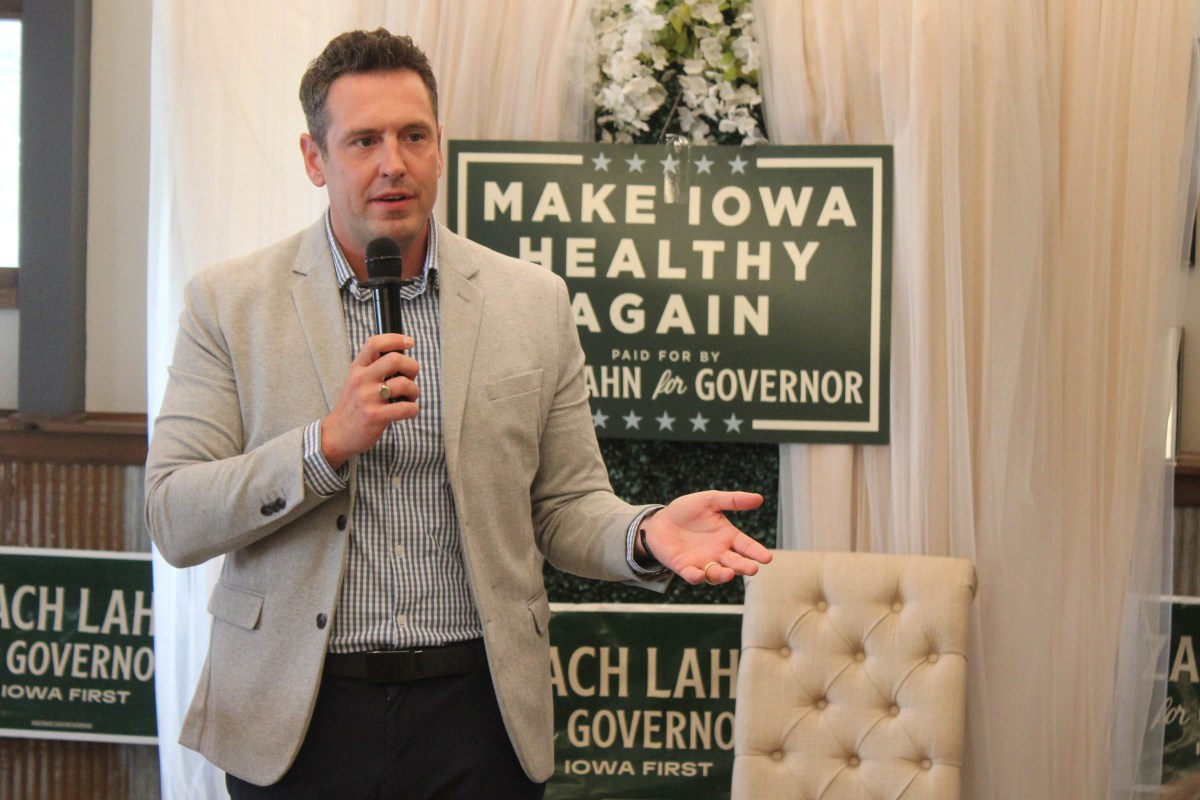
The arguments have resurfaced this year during the competition to replace Republican Gov. Kim Reynolds, who was Branstad’s protégé and continued contracting with private companies to manage Medicaid benefits. Zach Lahn, the Republican candidate to succeed the retiring governor, supports the practice. Rob Sand, the Democratic candidate, wants to end it.

“It’s been a disaster,” said Sand, Iowa’s state auditor. “The number of complaints has been catastrophic.”

Pros and Cons

Supporters of privatization say the insurers, known as managed-care organizations, make Medicaid more effective and efficient. Critics contend the companies pad their profits by denying payment for crucial health services and by shortchanging agencies and professionals who provide care.

Iowa is among 41 states, plus the District of Columbia, that contract with outside companies to run at least part of their Medicaid programs. Overall, private insurers manage the benefits of more than three-quarters of Medicaid patients. Connecticut is the only state that has fully reversed course after privatizing its Medicaid system.

Sand has criticized privatized Medicaid for years. As state auditor, he published reports alleging that the national insurers systematically deny or delay payment for services to which Medicaid participants are entitled.

He has vowed not to renew state contracts with the three insurers managing care for more than 600,000 Iowans on Medicaid, which is jointly financed by the state and federal governments. He would resume having state employees review and pay bills from clinics, hospitals, and other healthcare providers.

Lahn told KFF Health News that Sand’s pledge to resume state administration of Medicaid “is the exact wrong idea.”

Lahn is a former activist for Americans for Prosperity, a national pro-business group affiliated with the Koch family. He contends that state governments and Medicaid participants benefit when insurers compete to serve them.

“There are very few things that government does more efficiently than the private sector,” he said.

Lahn, who is a businessman and farmer, emphasized that state officials should strictly enforce contract requirements, ensuring that the insurers treat Medicaid recipients fairly and make prompt payments to care providers. He also said he would bar insurers from using artificial intelligence systems to determine whether to pay for medical claims under Medicaid. “Iowans deserve to have a human looking at their case,” he said.

Sand said in a recent interview that he doesn’t want Iowa to fully return to a “fee-for-service” Medicaid system, in which hospitals, clinics, and other healthcare agencies would effectively be paid piecemeal for whatever services they provided. Instead, he said, state employees should take over operation of a managed-care system, in which administrators review services to help ensure Medicaid participants receive what they need without wasting public money on ineffective services.

A few months ago, Republicans controlling the Iowa Legislature considered a bill to require the state to have a privately managed Medicaid system. That proposal would have blocked future governors from unilaterally shifting back to public management of the program. But the bill failed to pass.

Sand, a former assistant state attorney general, said he is confident he would have legal authority as governor to stop contracting with private Medicaid managers, although he cautioned that the transition would be complicated and could take time.

A man in light colored blazer and button down shirt holds a microphone. Behind him, campaign signs that say "MAKE IOWA HEALTHY AGAIN" are visible.
Republican candidate Zach Lahn says that if he were elected Iowa governor he would continue contracting with private insurance companies to manage the state’s Medicaid program because he believes they are more efficient than the government. (Erin Murphy/The Gazette via AP)
A man wearing a button down shirt and beige pants holds a microphone as he speaks to a small crowd of people.
Democratic candidate Rob Sand says that if he were elected Iowa governor he would end private management of the state’s Medicaid program, which he says has been a disaster. (KC McGinnis/Bloomberg via Getty Images)

A Toss-Up Race

National political observers say the Iowa governor’s race could go either way.

This June, Lahn won an underdog primary campaign to beat a sitting congressman backed by President Donald Trump. Lahn gained Trump’s endorsement after winning the Republican primary. He is a vocal supporter of the Make America Healthy Again movement, led by Health and Human Services Secretary Robert F. Kennedy Jr., which aims to improve Americans’ diets and reduce environmental poisons.

Sand noted that Lahn’s past political activism included a failed 2014 attempt to defeat a proposal to cover more people under Montana’s Medicaid program.

Lahn said that at the time he worried the federal government would reduce how much money it would contribute to such Medicaid expansions, leaving states to foot much of the bill. He said he also didn’t want to see public programs such as Medicaid giving benefits to adults capable of providing for themselves. But he said those concerns have been allayed, partly by the Trump administration’s moves to require millions of Medicaid recipients to prove they are working, volunteering, or going to school.

If elected governor, he said, he would not try to reverse Iowa’s expansion of Medicaid, which happened in 2014 under Branstad.

Branstad also is the governor who decided in 2016 to hire private insurers to manage Medicaid.

Branstad, who declined to comment for this article, did not need the legislature to approve his momentous decision. He weathered controversy over the change, including allegations that the companies systematically denied payment for care that people with disabilities needed to remain in their homes.

Andy Schneider, a Georgetown University researcher who studies health policy issues, said it’s understandable that many government leaders see an advantage in hiring private Medicaid management companies. Each state’s Medicaid program pays claims for hundreds of thousands or even millions of members, and administrators must scrutinize bills from thousands of hospitals, clinics, and other healthcare organizations. “That’s a heavy lift,” said Schneider, who worked in federal Medicaid administration when Barack Obama was president.

Schneider noted that Medicaid expenses are among the biggest parts of any state’s budget. The costs can vary dramatically year to year, he said, which is hard for legislators and governors to plan for. Management companies sign contracts for set amounts of money per enrollee, depending on people’s ages and health conditions. Managed-care companies say they can improve Medicaid members’ health and reduce expenses. But Schneider said outside researchers have been unable to confirm or disprove those claims.

Federal law gives states flexibility in how they run their Medicaid programs, including whether they hire private insurers to manage the programs. “Unwinding those arrangements might take a little time, but there’s no question they can do it,” Schneider said.

Connecticut ended its use of private insurers to run Medicaid in 2012. Minnesota legislators decided to contract only with nonprofit insurers, starting in 2025, and that state’s governor has talked about doing away with private management altogether.

Gary Jessee, a former Texas Medicaid director who helped transition that state’s program into managed care, noted that most Americans’ health coverage is managed by some kind of insurance company, whether they obtain it on their own or get it through a government or employer plan.

Jessee now helps run a health policy consulting company whose clients include Medicaid managed-care companies. He said states rarely talk about totally scrapping contracts with such companies. Instead, he said, states have options to change the contracts, including to increase oversight or limit profits.

Overall, Jessee said, managed-care companies help Medicaid enrollees obtain the services they need to stay healthy. But it’s hard to calculate how much money the companies save states, he said, because all healthcare costs have been rising, and new members of managed-care plans may at first use more services as the insurance companies encourage them to get regular checkups instead of waiting for emergencies.

Iowa’s Medicaid program is managed by three insurers: Molina Healthcare, Elevance Health subsidiary Wellpoint, and Centene subsidiary Iowa Total Care.

None responded to requests for comment for this article.

Catherine Gray of Des Moines helps run a Facebook page for families who use Iowa’s Medicaid system. Her adult son, John, is on Medicaid because of a disability. Gray said the managed-care companies have made it much harder for people to obtain services, including mental healthcare, dental care, and transportation to health appointments. Iowa’s shift to the private system was abrupt and chaotic, she said. “We know people have died,” she said.

Gray said she probably will vote for Sand for governor, even though she doesn’t agree with every nuance of his stance on Medicaid. She suspects many other Iowans who use the program will do the same. “They’ve really been put through the wringer for 10 years, and they’re exhausted.”

KFF Health News is a national newsroom that produces in-depth journalism about health issues and is one of the core operating programs at KFF—an independent source of health policy research, polling, and journalism. Learn more about KFF.

This article first appeared on KFF Health News and is republished here under a Creative Commons Attribution-NonCommercial-NoDerivatives 4.0 International License.


from KFF Health News https://ift.tt/F95XEap

Hyd hospitals see rise in RT-PCR test enquiries amid AP covid cases

Doctors at Osmania General Hospital (OGH) and Niloufer Hospital said people seeking tests include travellers, those with mild respiratory symptoms, and attendants of elderly or immunocompromised patients.

from Top Health News | Latest Healthcare Sector & Healthcare Industry news, Information and Updates: ET HealthWorld : ETHealthworld.com https://ift.tt/Oud7tGf

Ahead of dengue vaccine rollout, all 4 strains found in circulation

The pan-India molecular surveillance study, led by ICMR-National Institute of Virology, Pune, analysed 6,889 lab-confirmed dengue samples collected through 45 virus research and diagnostic laboratories (VRDLs) across 25 states and UTs between 2023 and 2025. It found that dengue serotypes - at least two - were co-circulating in each state and UT included in the surveillance, indicating increasing hyperendemicity of the disease in India.

from Top Health News | Latest Healthcare Sector & Healthcare Industry news, Information and Updates: ET HealthWorld : ETHealthworld.com https://ift.tt/gYNCPo2